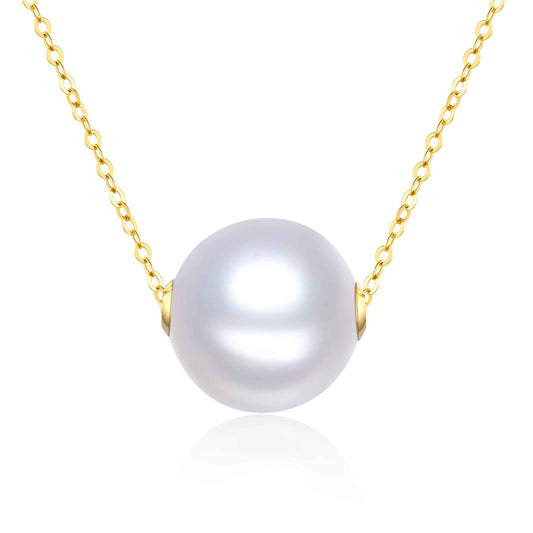
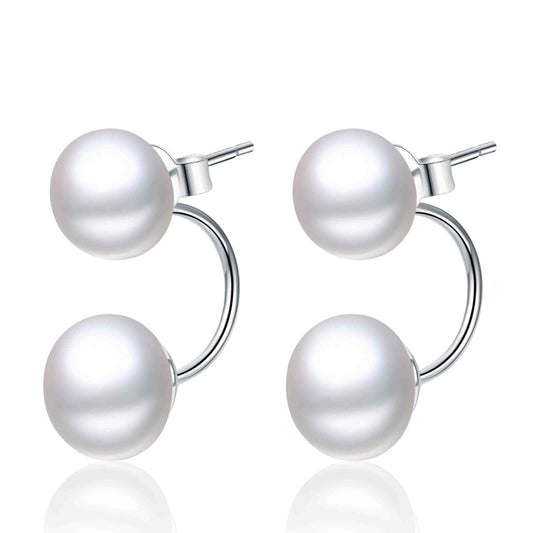
Which Is More Valuable: Black or White Pearls?
Are black pearls more valuable than white pearls, or does classic white still hold the stronger position? It's a question we hear often, and the answer is more nuanced than most people expect. Neither color is automatically more valuable. Black pearls' value and white pearls' value both depend on the same set of quality factors, and color is only one piece of that picture.
What we'll do here is walk through what actually drives pearl pricing, compare where black and white pearls each have the advantage, and give you a practical framework for judging value before you buy.
What Actually Determines Pearl Value?
Are black pearls worth more than white, or the other way around? The honest answer is that color alone doesn't decide it. Pearl value is shaped by a combination of factors: pearl type, size, luster, nacre quality, surface condition, shape, color depth, and matching.
Understanding these factors is the only reliable way to compare black and white pearls fairly.
Pearl Type: The Biggest Reason One Pearl Costs More Than Another
When people compare white pearls vs black pearls, they're often comparing entirely different pearl types without realizing it. Black pearls are most commonly Tahitian pearls, cultured in French Polynesia in the black-lipped oyster. White pearls may be Akoya, Freshwater, or South Sea pearls, each with distinct size ranges and nacre profiles.
White South Sea pearls, grown in Australian and Philippine waters, can be extremely valuable because of their large size and thick nacre. A high-quality white South Sea pearl may be worth considerably more than a lower-quality black pearl. Pearl type sets the ceiling before any other factor comes into play.
Size: Larger Pearls Usually Increase Value
Are black pearls expensive? Often, yes, and size is part of the reason. Larger pearls are rarer to culture and generally more valuable when other quality factors are equal.
A large, luminous black Tahitian pearl can cost more than a small white Akoya pearl. At the same time, a large white South Sea pearl may cost more than many black pearls on the market. Size matters, but it doesn't decide value on its own.
Luster: The Glow Matters More Than the Color
Luster is one of the most important factors in the value of black pearls. A pearl should look alive. A black pearl with weak, chalky luster will not command a high price simply because it is dark.
A white pearl with sharp, mirror-like luster may be worth more than a dull dark pearl, regardless of how dramatic its color appears. When we assess pearl quality, luster is usually the first thing we look at.
Color Quality: Rare Overtones Can Raise Black Pearl Value

Black pearls are rarely plain black. They often display secondary overtones of peacock, green, blue, silver, purple, or aubergine. Rich and even overtones make black pearls more valuable on the market because they are harder to find.
White pearls with rose, silver, or cream overtones are also highly desirable. The depth and beauty of the color matter far more than the color name itself.
Surface Quality: Fewer Blemishes Mean Higher Value
Both black and white pearls are judged by the same surface criteria: visible spotting, pitting, cracks, or unevenness.
A clean white pearl can be more valuable than a heavily blemished black pearl. A clean black pearl with strong color and luster can command a higher price in return. Shoppers should inspect surface quality closely, especially when buying strands or pairs.
Shape: Round Pearls Often Command Higher Prices
Round pearls are harder to culture, and that rarity tends to be reflected in their value. Round black Tahitian pearls can be expensive, and round white South Sea or Akoya pearls can also carry significant price premiums.
Baroque and drop shapes can be prized for their visual character, but roundness still tends to drive traditional pricing upward.
Matching: Strands and Pairs Can Increase the Price
For earrings, strands, and bracelets, matching adds real cost. A well-matched black pearl strand can be expensive because finding dark pearls with similar overtones, luster, and size is genuinely difficult.
A well-matched white pearl strand carries similar value when the pearls align in size, luster, and tone. Single pearls and matched jewelry are priced differently, and it's worth understanding which you're comparing.
Natural Color vs Treated Color: Disclosure Matters
Naturally colored black pearls are generally more desirable than dyed black pearls when other quality factors are equal. Are black pearls expensive when the color is treated? Less so, typically.
White pearls may also be bleached or toned depending on type and seller. The key issue is transparency. Treated pearls aren't inherently inferior, but buyers deserve to know what they're purchasing before they judge the price.
Meaning Does Not Decide Market Value
Black pearl meaning is often associated with mystery, strength, elegance, and individuality. These associations can make a pearl feel deeply personal and meaningful.
However, symbolism does not move the market price. Black pearls' value in financial terms still depends on quality, rarity, and pearl type, not the story attached to the color.


When White Pearls Can Be More Valuable Than Black Pearls
White pearls vs black pearls comparisons often assume black is the premium choice. That assumption doesn't hold up at the higher end of the market.
Fine white South Sea pearls are among the most valuable pearls in the world because of their size, nacre thickness, and soft luminous glow. High-quality Akoya pearls are prized for their sharp, reflective luster. A large, clean, well-matched white South Sea strand can be worth significantly more than a smaller or lower-quality black pearl piece.
White pearls also remain the most desired choice for bridal, heirloom, and formal jewelry, which sustains strong demand across generations.
When Black Pearls Can Be More Valuable Than White Pearls

Black pearls' value rises when the quality is genuinely there to support it. A natural-color black pearl with strong luster, a rare peacock or vivid overtone, a clean surface, and a larger size can be worth more than many white pearl options.
A high-quality Tahitian black pearl may comfortably outprice a small, commercial-grade white freshwater pearl. When a seller can document natural color and the overtones are visually striking, black pearls can rank above white pearls on the value scale. The key phrase is "when quality supports it."
FAQs
Are black pearls more valuable than white pearls?
Not always. Black pearls can be more valuable, but only when pearl type, luster, size, surface, and color quality support the price.
Are black pearls expensive?
High-quality natural-color black pearls, especially Tahitian pearls, can be expensive. Treated or lower-grade black pearls are more affordable.
What makes black pearls worth more?
Natural dark color, strong luster, attractive overtones, a clean surface, larger size, and good matching all contribute to higher black pearl value.
Can white pearls be more expensive than black pearls?
Yes. Fine white South Sea or Akoya pearls can be worth more than lower-quality black pearls, sometimes significantly so.
Does the black pearl's meaning affect the price?
Meaning may add personal value, but market price depends on pearl quality and rarity, not symbolism.
Choose Value by Quality, Not Just Color
Black pearls are not automatically more valuable than white pearls, and white pearls are not automatically the safer investment. Black pearls' value, like white pearls' value, comes down to type, size, luster, nacre, surface condition, color quality, and matching. Color is part of the picture, but it is never the whole answer.
The pearl that is most valuable to you is the one with the quality, character, and presence that resonates. At Timeless Pearl, we invite you to explore our pearl jewelry and compare the glow, color, and character that feel most valuable to you.