Why Are South Sea Pearls So Big? The Science Behind Their Remarkable Size
South Sea pearls have a presence that is difficult to mistake. Even a single pearl can appear generous and luminous, with a scale that sets it apart from the smaller pearls many of us first picture.
So, why are South Sea pearls so big? Their size does not come from one factor alone. It begins with an exceptionally large pearl oyster, then develops through careful nucleation, genuine nacre growth, time, and a healthy marine environment.
Understanding that process reveals why these cultured pearls can reach such impressive proportions. It also makes South Sea pearl size easier to judge when choosing earrings, necklaces, or other jewelry.
In this blog, we will explore how oyster size, nucleation, nacre growth, and time give South Sea pearls their remarkable scale.
Why Are South Sea Pearls So Big?
South Sea pearls grow inside the Pinctada maxima oyster, the largest species in its genus. Its spacious body can accommodate a larger bead nucleus than smaller pearl oysters can safely hold.
After nucleation, living tissue forms a pearl sac around that bead and begins depositing nacre. Over time, those luminous layers add depth and diameter. The finished size therefore reflects both the pearl’s substantial starting nucleus and the nacre produced by the oyster.
Host size, health, water conditions, and cultivation time all contribute. None works alone, which is why pearls from the same category can still emerge at noticeably different sizes.
Pinctada Maxima Oyster Creates Room to Grow
The Pinctada maxima oyster is an impressive mollusk, with a shell that can grow beyond 30 centimeters. That physical scale creates the biological space needed for unusually large cultured pearls.
By comparison, a smaller oyster has less room for a large nucleus and less capacity to support it comfortably. The Pinctada maxima oyster gives pearl farmers a broader starting point, but the oyster itself does not guarantee a particular result.
Each pearl still depends on how successfully the oyster accepts the nucleation procedure and maintains healthy nacre production. This is why the species sets the potential scale, while biology shapes the individual pearl.
Our guide to where South Sea pearls come from explores how this oyster is connected to its warm-water origins.
Larger Nucleus Gives the Pearl Its Head Start
Cultured South Sea pearls usually begin with a rounded bead nucleus and a small piece of donor mantle tissue. A skilled technician places them together inside the host oyster. The tissue then develops into a pearl sac around the bead.
Cells lining that sac secrete nacre, the natural material responsible for a pearl’s surface, luster, and subtle depth. The final diameter therefore reflects the size of the nucleus and the thickness of the nacre surrounding it.
This distinction matters. A cultured pearl is human-initiated, but it is not an artificial pearl. Its visible surface is created by a living oyster through a genuine biological process.
It also corrects the familiar grain-of-sand story. That image may describe a popular idea about natural pearl formation, but it does not explain how bead-cultured South Sea pearls begin. Our guide to how pearls form examines that wider process.
Nacre, Time, and Healthy Waters Complete the Process
Once the pearl sac forms, nacre is deposited in successive microscopic layers. Given sufficient cultivation time, those layers build around the nucleus and help create the smooth, luminous character associated with South Sea pearls.
Time, however, is not a simple promise of greater size or quality. The oyster must remain healthy enough to continue steady nacre production. Water quality, temperature, available food, and other environmental conditions can influence its growth and the pearl developing within it.
This delicate relationship also explains natural variation. One pearl may become round and beautifully balanced, while another develops an oval, drop, circled, or baroque form. The process is guided with great care, yet the living oyster always has a role in the final result.
What South Sea Pearl Size Looks Like in Real Life

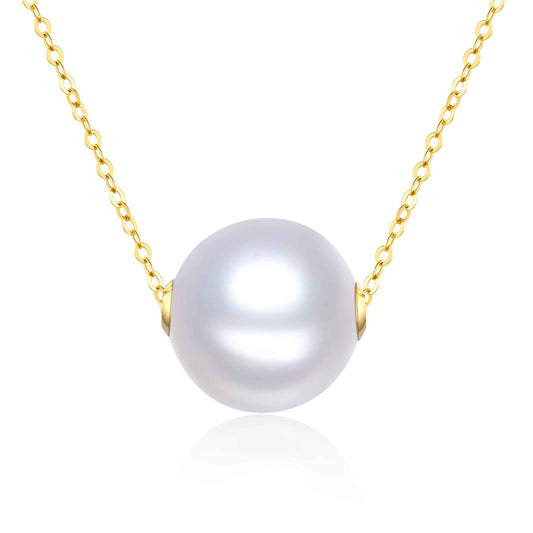
South Sea pearls commonly measure about 8-20 mm, with an average near 13 mm. Exceptional specimens may grow larger, but they sit well beyond the everyday range. Size is recorded in millimeters across the pearl’s diameter.
A difference of one or two millimeters can look surprisingly dramatic. Assuming a round shape, a 12 mm pearl has about 73 percent more volume than a 10 mm pearl. The number changes modestly; the visual presence changes considerably.
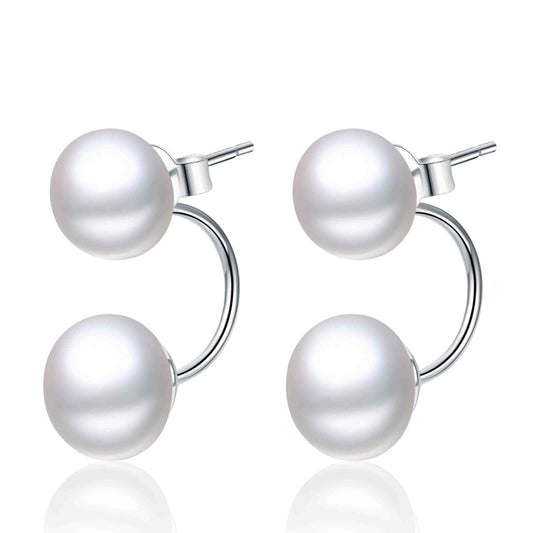
This effect is especially noticeable in South Sea pearl earrings. A restrained pair can frame the face with a soft glow, while large pearl earrings make a more expressive statement. Studs place the diameter directly on the earlobe, whereas drops add movement and may make the pearl feel more prominent. Comfort will also depend on weight, setting, and support.


Why the Largest Pearl Is Not Always the Finest
Size gives South Sea pearls their celebrated presence, but it should be considered alongside every other quality that makes a pearl beautiful. Luster determines how light reflects from the surface. Shape influences the mood of the design, while color and overtone affect how the pearl appears against the skin.
Surface character matters too. Minor variations are natural, and a pearl with delicate markings may still have compelling luster and personality. For earrings or strands, matching introduces another consideration because two or more pearls must harmonize in size, color, shape, and glow.
The most satisfying choice is not automatically the largest available pearl. It is the one whose scale, character, setting, and comfort feel beautifully balanced for you.
FAQs
Are South Sea pearls naturally large or made large through cultivation?
They are naturally large because Pinctada maxima can hold a larger nucleus and grow thick layers of nacre around it.
Does a larger oyster always produce a larger pearl?
No. Nucleus size, oyster health, water conditions, cultivation success, and nacre growth also influence the finished diameter.
Are all very large cultured pearls South Sea pearls?
No. Tahitian and freshwater cultured pearls can also be large, so size alone cannot confirm a pearl’s identity.
Does longer cultivation always create a better pearl?
No. Additional time can add nacre, but luster, surface, shape, health, and growing conditions still determine quality.
Are large South Sea pearl earrings comfortable?
They can be, although comfort depends on diameter, weight, setting, support, design, and personal preference.
Understanding the Beauty Behind the Scale

A South Sea pearl’s size begins with the remarkable capacity of Pinctada maxima, but its character develops through nucleation, nacre growth, time, and living conditions. That combination gives each pearl its own balance of scale, surface, shape, and light.
Knowing the science makes their generous proportions feel even more meaningful. At Timeless Pearl, our South Sea pearl collection offers a place to appreciate how this natural scale appears in finished jewelry.
Explore Timeless Pearl’s South Sea Pearl Jewelry Collection and discover the presence these remarkable cultured pearls bring to a design.